

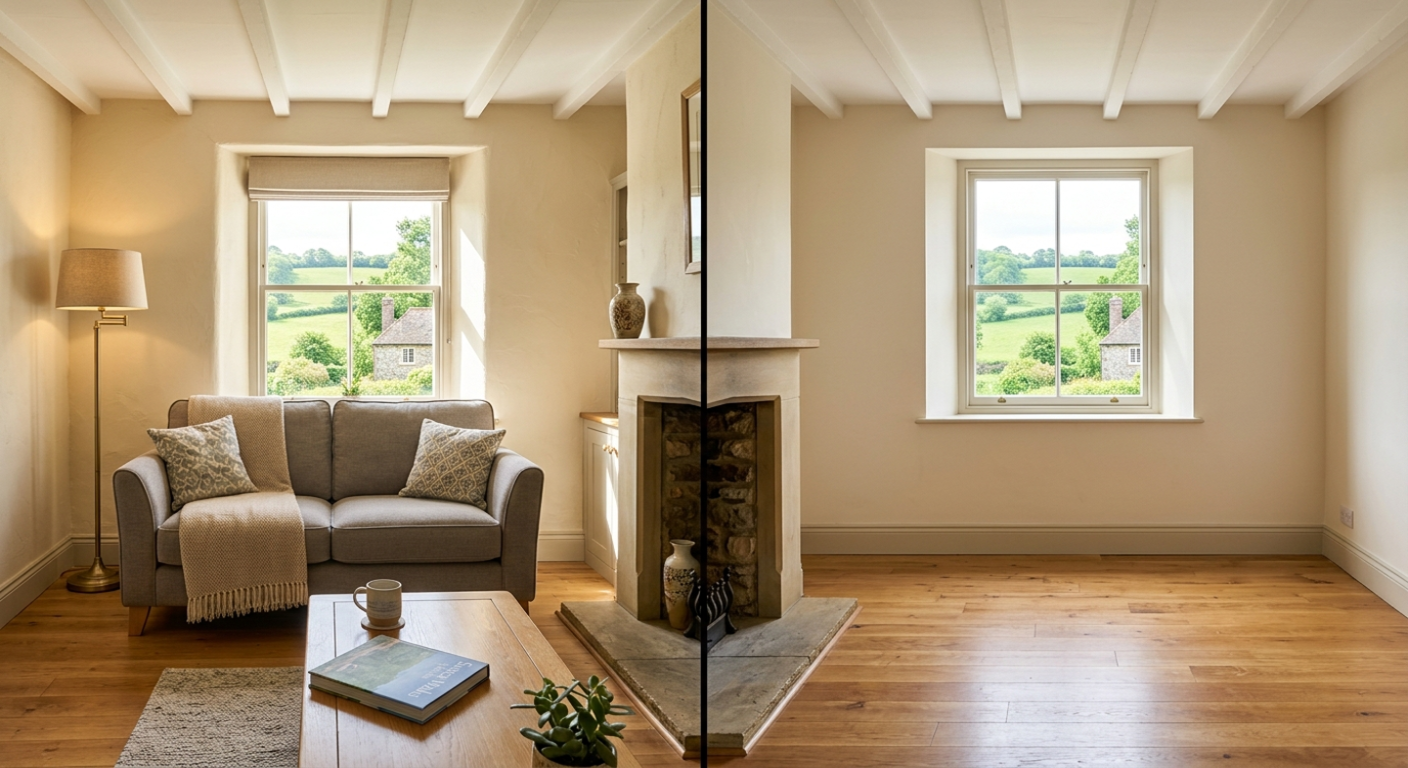
Before a rental property reaches the market, one question deserves more attention than it sometimes receives: how will the next tenant actually use the space? A tenant arriving without furniture has very different needs from a household bringing beds, sofas, tables and years of belongings. That is why the decision to offer a Crowborough rental furnished or unfurnished deserves more thought than simply leaving existing furniture in place. The right setup can make the home practical for the tenants it is most likely to attract.
What Is the Difference Between Furnished and Unfurnished Rental Properties?
A furnished rental provides the main furniture a tenant needs to live comfortably from the start. This can include beds, wardrobes, sofas, tables and chairs. The exact contents differ from one property to another, so landlords should clearly record everything supplied as part of the tenancy.
An unfurnished property normally comes without movable furniture. However, “unfurnished” does not mean completely empty. Flooring, kitchen units, bathroom fittings and other permanent fixtures remain, while appliances such as an oven, fridge or washing machine can also be provided.
There is also a middle ground. A part-furnished property includes selected items rather than everything needed to furnish the home.
Understanding these options is straightforward. Deciding which one works for a particular rental property requires a closer look at who the property is likely to attract and how it will be used.
How Do Landlords Decide Between Furnished and Unfurnished Rental Properties?
The right choice depends largely on the property and the type of tenancy it suits. A smaller flat and a family-sized house do not necessarily attract tenants with the same needs, so furnishing both in the same way does not always make sense.
Landlords should consider the size and layout of the property, available storage, and how tenants are likely to use the space. The expected length of the tenancy also matters. Tenants looking for a longer-term home can already have furniture and prefer the freedom to arrange rooms around their own belongings. Others can value a property that is ready to live in without the cost of buying larger items. The condition and suitability of the furniture also matter.
Filling rooms with unnecessary or oversized items can reduce usable space rather than make the property more appealing. If furniture is provided, it should suit each room’s size and purpose and be practical for everyday use.
For this reason, the decision isn’t simply about whether to include furniture. Landlords need to consider what each option offers tenants and what it requires from them throughout the tenancy. Looking at the advantages and disadvantages of furnished and unfurnished rentals makes these differences clearer.
What Are the Pros and Cons of Furnished and Unfurnished Rentals?
Furnished and unfurnished rentals each come with advantages and drawbacks for landlords and tenants. The main differences relate to cost, convenience, maintenance, and flexibility. Comparing these points can help show what each option involves in practice.
Furnished Rental Properties
Pros:
- Easier for tenants to move in: Tenants do not need to buy or transport large items such as beds, sofas, wardrobes and dining furniture.
- Ready for immediate use: A well-furnished property gives tenants the main items needed for everyday living from the start.
- Can suit tenants without their own furniture: This can make the property more practical for people who do not want to invest in furniture for a rental home.
- Can improve presentation: Suitable furniture can help prospective tenants understand how the rooms and available space can be used.
Cons:
- Higher initial cost: Buying suitable furniture adds to the landlord’s cost of preparing the property for rent.
- More maintenance: Supplied furniture can become worn, damaged, or outdated and need repair or replacement.
- Additional safety responsibilities: Furniture supplied by the landlord must meet applicable safety requirements.
- Possible storage problems: Tenants who already own furniture can ask whether they can remove some supplied items, leaving the landlord to decide where to store them.
Unfurnished Rental Properties
Pros:
- Greater freedom for tenants: Tenants can bring their own furniture and arrange the property according to their needs.
- Lower furnishing costs: Landlords do not need to buy a full set of furniture before advertising the property.
- Fewer items to maintain: There is less landlord-owned furniture to inspect, repair or replace during and between tenancies.
- More space for tenants’ belongings: This can be useful for households that already own most of the furniture they need.
Cons:
- Less convenient for some tenants: Anyone without furniture faces the additional cost and effort of furnishing the property.
- Empty rooms can require stronger presentation: Without furniture, prospective tenants can find it harder to judge how larger items will fit into certain rooms.
- Not suitable for every target tenant: Some renters specifically want accommodation ready to occupy without buying furniture.
Neither option has an advantage in every situation. The value of each depends on the property and the tenants it needs to attract. That raises an important local question: what does the Crowborough rental market currently indicate about furnished and unfurnished properties?
Still Confused About What Is Right for Your Rental Property?
When the choice between furnished and unfurnished is unclear, speaking to a local letting agent can help you make the right decision. An agent can consider the property type, condition, likely tenants, and comparable rentals to determine which approach best suits the local market.
For landlords in Crowborough, Charles Century can provide local insight into rental demand and advise on how to prepare a property before advertising. A rental valuation can also help set a realistic asking rent and identify how to position the property to attract suitable tenants. Contact Charles Century to arrange a rental valuation and discuss the right approach for bringing the property to market.
