
Monday - Friday: 8:30am - 6pm
|
Saturday: 9am - 5:00pm
|
Sunday by appointment

Selling a House in Hailsham? What to Check Before Signing Agreement With an Estate Agent

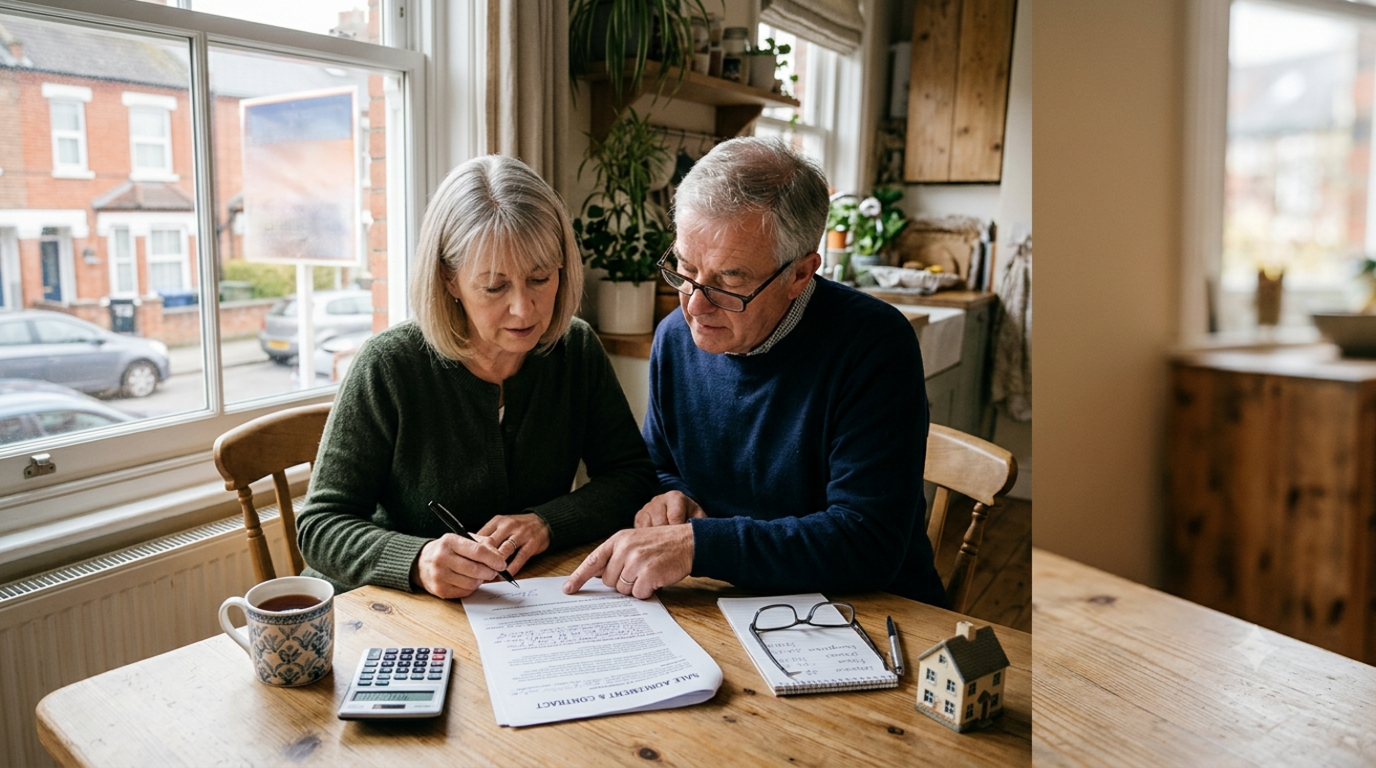
Choosing an estate agent can feel like one of the easier decisions when selling a home. You meet a few agents, discuss what the property could sell for, compare their fees, and decide who you feel most comfortable working with. But before the property photographs are taken and the listing goes live, there is one important step that deserves more attention: the agreement you are being asked to sign.

It is easy to focus on the valuation and skim through the rest, especially when you are keen to get the sale moving. The agreement, however, sets the terms for what happens next. It can affect how much you pay, how long you stay with the agent, and what happens if you later decide the arrangement is not working.

If you are selling a house in Hailsham, read the agreement carefully and make sure it reflects the conversations you have already had with the agent.

Here are the areas worth checking carefully.

What Type of Estate Agency Agreement Are You Signing?

Start by checking how you’ll instruct the agent to sell the property.

In the UK, there are four common types.

Sole agency. You appoint one agent only. If anyone buys your home during the contract period, you pay that agent, even if you found the buyer yourself.

Sole selling rights. You also appoint one agent, but this version is stricter. You pay the fee even if you find the buyer on your own, for example, a neighbour or a relative.

Joint sole agency. Two agents share the work and split the fee. This option is less common but can suit homes that need wider reach.

Multi-agency. You appoint several agents, and only the one who sells the property earns the fee. The fee is usually higher, because each agent takes a risk that someone else will win the sale.

Many people believe that a sole agency always gets a better price because the agent works harder. The truth is simpler. A sole agent gets certainty of payment, which can encourage effort, but results depend on the agent’s skill, local knowledge, and marketing, not on the contract type alone. Ask the agent to explain which type they are offering and why they recommend it for your home.

Do not rely on the name of the agreement alone. Read the terms and ask the agent to explain anything that is unclear before signing.

How Much Will the Estate Agent Charge?

Fees in the UK are usually a percentage of the final sale price plus VAT. Many agents advertise a low headline figure, but the number you see in the brochure is often not the number you pay.

Here is a simple example. If your home sells for £300,000 and the agent charges 1.2% plus VAT, the fee is £3,600 plus £720 VAT, which totals £4,320. At 1.5% plus VAT, the same sale costs £5,400.

Always ask these questions:

  • Is the fee a percentage or a fixed amount?
  • Does the quoted figure include VAT?
  • Is the percentage based on the sale price or the asking price?

Write down the final figure in pounds. Seeing the real amount in black and white makes comparison between agents much easier.

What Is Actually Included in the Estate Agent’s Fee?

Two agents can quote similar fees while offering quite different levels of service.

Find out what the quoted fee actually covers.

Does it include professional photography and floor plans? Will the property be advertised on the main property portals? Who will arrange and conduct viewings? How will potential buyers be followed up after a viewing?

The support provided after an offer is accepted matters too.

A sale still has a long way to go at that point. Communication between the seller, buyer, solicitors and other parties in the chain can become important as the transaction progresses. Government guidance specifically recommends checking whether an agent has dedicated sales progression support and whether this service costs extra.

Ask for a clear explanation of what is included before comparing one estate agent’s fee against another.

How Long Are You Committed to the Estate Agent?

This is one of those details that can seem unimportant when everything is going well.

At the beginning, the focus is usually on getting the house photographed, listed, and in front of buyers. But imagine a couple of months later the property is receiving little interest. Updates from the agent become less frequent, and you start to wonder whether another approach would work better.

That is when the length of the agreement suddenly matters.

Look for any minimum period that keeps you with the agent and check when you are allowed to give notice. A contract might also continue after its initial period unless notice is given, so find out exactly how the arrangement ends.

The easiest way to approach this is to think ahead. If you became unhappy with the service, how quickly would you be able to move to another agent?

Knowing the answer before signing gives you a much clearer idea of the commitment you are making.

When Could You Still Have to Pay a Fee After Leaving the Agent?

This is the point that surprises sellers the most. Many agreements contain a “tie-in” or “protection” clause. It means the agent can still claim a fee after your contract ends if a buyer they introduced completes the purchase later.

Imagine a couple views your house in week three. You leave the agent in week ten and move to a new one. In week fourteen, that same couple buys your home through the new agent. The first agent may still have the right to charge you. In that situation, you could owe two fees.

Ask the agent to explain this clause in plain words. Find out how long the protection period lasts, because it often runs for 6 to 12 months. Also ask whether it applies only to buyers who viewed the property or to anyone who saw it online.

Are There Any Additional or Withdrawal Costs?

Some agreements include charges that never appear during the valuation chat. These may include:

  • A withdrawal fee if you take your home off the market before the contract ends
  • Marketing costs charged separately for a premium listing or a video tour
  • Administration fees for preparing documents
  • Charges for extra photography or a second visit

A withdrawal fee can be especially painful. If you decide to rent out your home or delay the move for family reasons, you could pay a fixed sum even though the house never sold. Check whether this fee exists and how it is calculated.

Does the Agreement Match What Was Discussed During the Valuation?

Think back to the conversation you had when the agent valued the property.

Perhaps you were told that professional photography would be included. You may have discussed who would handle viewings, how regularly you would receive feedback or how the property would be marketed. The fee and length of the agreement may also have formed part of that conversation.

Now compare those discussions with what you are being asked to sign.

If something is missing, ask the agent to add it before you sign. A trustworthy agent will welcome this request. If an agent resists, treat that as useful information about how they may behave later.

Final Thoughts

Selling your home is a big step, and the agent you choose will guide you through it. The agreement is the foundation of that relationship, so read it slowly, ask questions, and never feel pressured to sign on the day. A good agent gives you time.

Before you sign, take these steps. Compare at least two or three local agents. Ask for the agreement in advance so you can read it at home. Request a clear written breakdown of fees, contract length, and exit costs. Finally, speak to a solicitor if any clause feels confusing.

When you understand every line, you can sign with confidence and focus on what matters most: finding the right buyer at the right price for your Hailsham home.

Ready to Sell a House in Hailsham?

If you are preparing to sell a house in Hailsham, Charles Century can help you understand where your property sits in the local market and how to position it for sale.

The conversation can begin with a property valuation, followed by a clear discussion about the proposed asking price, marketing approach, fees, and the service involved in taking the property from listing through to sale.

Is Hailsham a Good Area for Selling or Letting a Property?

Hailsham is an established East Sussex market town located a short drive from Eastbourne and within reach of the coast and surrounding employment centres. Its community atmosphere, varied housing stock, local amenities, schools, and access to open countryside attract families, first-time buyers, downsizers, and tenants. This appeal has brought more buyers and tenants to the town over the past few years, and demand has been steadily building ever since. Here’s the current picture:
  • Sold prices in Hailsham average £416,180
  • Asking prices have climbed over 2% in the past six months.
  • Rental demand across the BN27 postcode continues to outpace supply.
  • Landlords report consistent interest in two and three-bedroom homes.
More people are searching for property here than the current stock can comfortably absorb. That scarcity is shaping both the sales and rental markets. So, is Hailsham a good area for selling or letting a property? Yes, it can support both. The town attracts families, first-time buyers, downsizers, and tenants thanks to its varied housing, local services, jobs, and outdoor space. That said, your own result depends on a few specifics: your property type, street, condition, asking price, and target audience. Here’s how to think through each one.

Why Hailsham Appeals to Both Buyers and Tenants

Hailsham attracts buyers and tenants for one simple reason. It offers space, good transport links, and lower prices than the surrounding coastal towns, without sacrificing convenience. Here’s what draws people in:
  • Commuters rely on the A22 and A27, which connect Hailsham to Eastbourne, Polegate, and onward to Brighton.
  • Families move here for the schools and the settled, community feel. Grovelands Community Primary on Dunbar Drive has served local children since 1934.
  • Retirees and downsizers choose Hailsham for the slower pace, the market town centre, and easy access to healthcare and shops.
This broad appeal matters when you plan to sell property in Hailsham or let property in Hailsham. A wider pool of interested buyers or tenants means your property does not sit on the market for long, and it gives you stronger negotiating power on price or rent.

Current Hailsham Property Market Trends

Right now, Hailsham sits in a genuinely healthy position. These are the key figures property owners should pay attention to:
  • Average sold price (last 6 months): £416,180
  • Average asking price: £484,376, up 2.38% in six months
  • Detached homes: average £420,833
  • Flats: average £179,750
  • Average time to sell: 16 weeks
National forecasters expect this momentum to continue through 2026. The Office for Budget Responsibility projects average UK house prices to rise by around 2.5% this year. Knight Frank puts the figure closer to 3%. Locally, agents across East Sussex expect three and four-bedroom homes to stay the most sought-after property type, driven by families chasing space and good schools rather than city commutes. On the rental side, the picture is just as strong. Nationally, average rents reached £1,353 a month by June 2026, and most analysts expect rental growth of between 2% and 3.5% across the year. That growth is being driven by a genuine shortage of rental stock, with roughly a quarter fewer homes available to rent than before the pandemic. Hailsham has not escaped this shortage, and landlords letting property in Hailsham are seeing consistent applicant interest, particularly for two and three-bedroom family homes. One change every landlord needs to know about is the Renters’ Rights Act, which came into force on 1 May 2026. It scraps Section 21 “no-fault” evictions, moves all tenancies onto a periodic basis, and requires landlords to give tenants proper advance notice before raising rent. If you are letting property in Hailsham, or thinking about it, this legislation changes how you plan tenancies and rent reviews, and it is worth getting proper guidance before you list.

What Property Types Can Work Well in Hailsham?

Hailsham has a genuinely mixed housing stock, and this variety is part of its strength. Three- and four-bedroom detached and semi-detached houses remain the most searched property type in the area and consistently attract strong interest from growing families. Terraced houses and period cottages appeal to first-time buyers and young couples who want character without stretching their budget too far. Flats and apartments, especially two-bedroom options near the town centre, perform well in the rental market because they suit young professionals and couples who want to be close to shops, transport links, and local amenities. New build developments on the edge of town are also gaining attention from buyers who want modern energy-efficient homes with lower running costs. If you are unsure which category your property falls into or how it compares locally, speaking with local estate agents in Hailsham gives you a clearer, more accurate read on demand for your exact type of home.

What Are the Best Areas and Streets Within Hailsham?

There is no single “best” street for every buyer, tenant, or property owner. Homes near the town centre, High Street, Vicarage Field, and Market Street can appeal to people who want easy access to shops, cafes, services, and public transport. Central homes may work well for tenants who do not want to rely heavily on a car. Areas around Battle Road and London Road provide access to schools, established residential streets, and routes through the town. Properties near the Cuckoo Trail can appeal to buyers and tenants who value walking, cycling, and access to green space. Hempstead Lane and residential areas closer to the A22 may suit people who regularly travel towards Eastbourne, Polegate, or other parts of East Sussex. Newer developments around the edges of Hailsham can attract families who prefer modern layouts, energy-efficient homes, parking, and lower immediate maintenance needs. However, street-level details often matter more than the wider neighborhood name. Buyers and tenants notice:
  • Parking availability
  • Traffic levels
  • Garden position and privacy
  • Nearby schools and walking routes
  • Planned housing development
  • Access to shops and employment
  • The condition of neighbouring properties

Selling vs Letting in Hailsham: A Simple Comparison

Deciding between selling and letting comes down to your goals, your timeline, and your finances. Selling gives you a lump sum and releases your equity in one go. This route suits owners who want to move on completely, free up capital for another purchase, or step away from property ownership altogether. Given the steady buyer interest in Hailsham right now, well-presented homes often generate strong offers within a reasonable timeframe. Letting, on the other hand, builds a long-term income stream and lets you hold onto an asset that may continue to grow in value. This route suits owners who are relocating temporarily, who want to build a property portfolio, or who are not ready to give up ownership just yet. Working with experienced letting agents in Hailsham takes the pressure off, since they handle tenant referencing, compliance, and ongoing management on your behalf. Neither option is automatically better. The right choice depends entirely on what you need the property to do for you financially and personally.

How Charles Century Can Help Hailsham Property Owners

Charles Century understands the Hailsham market inside and out, and we bring that local knowledge directly to your doorstep. We start every relationship with an honest, accurate valuation that Hailsham owners can actually rely on, based on real comparable sales and lettings rather than inflated guesswork designed to win your instruction. Our team guides you through every stage of the process, whether you want to sell or let property in Hailsham. We handle professional marketing, manage viewings, negotiate on your behalf, and keep you informed at every step. For landlords, we offer full property management support, covering everything from tenant referencing to ongoing maintenance, so your rental property in Hailsham runs smoothly without eating into your time. Our goal is simple: to help you achieve the best possible outcome with as little stress as possible.

FAQs About Selling or Letting Property in Hailsham

  • It can be when the rent, property type, condition, and location match local tenant demand. Ask experienced letting agents in Hailsham for comparable rental evidence before estimating your return.

  • Complete essential repairs first. Approve further work only when it is likely to improve the sale price, achievable rent, or level of interest.

  • Two and three-bedroom homes near schools and transport links tend to attract the most tenant interest. 

  • While it is not compulsory, working with experienced letting agents in Hailsham helps you find reliable tenants, stay compliant with regulations, and manage the property efficiently, saving you time and reducing risk. 

CC_Logo_RoundFive_
CROWBOROUGH BRANCH

01892 280435

HAILSHAM BRANCH

01323 302226